

 English
 Français
 Deutsch
 Italiano
 Português
 Русский
 Español
 简体中文
简体中文 日本語
日本語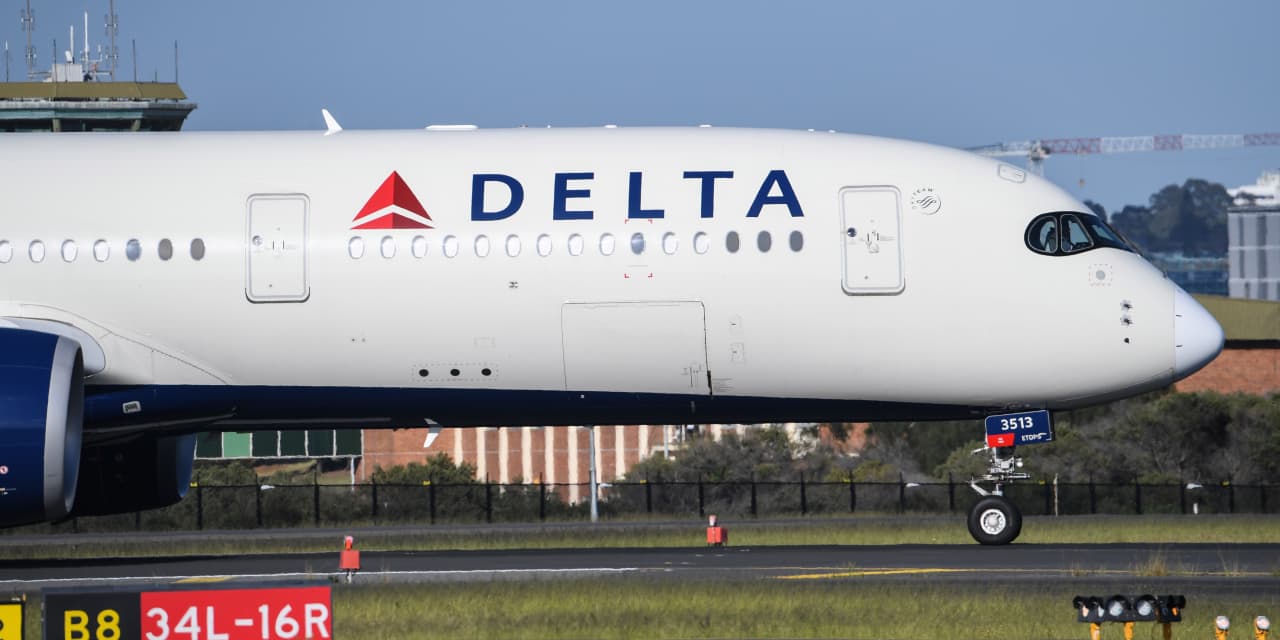

Delta Air Lines
stock turned lower Thursday as the first of the “big four” U.S. carriers reported earnings ahead of expectations. Positive news about demand wasn’t enough to give the carrier’s shares a sustained boost.
Delta (ticker: DAL) reported earnings of $2.03 a share from revenue of $14.6 billion in the third quarter, beating expectations among analysts surveyed by FactSet for earnings of $1.95 a share and revenue of $14.5 billion. Shares in the airline fell 2.1% to $35.22, after rising about 3% in the premarket session.
The
S&P 500
was down 1%.
“Robust demand for travel on Delta is continuing into the December quarter where we expect total revenue growth of 9 percent to 12 percent compared with the December quarter 2022,” said Glen Hauenstein, Delta’s president.
That forecast should allay concerns over the impact of the end of the peak summer travel season and consumers feeling the pinch from inflation.
Fellow carriers
United Airlines
(UAL) and
American Airlines
(AAL) traded lower.
Delta posted mixed news on fuel costs, which have been another area of concern as the price of oil has risen in recent months. Worries have been recently compounded by the potential disruption to energy markets following the attack on Israel.
The company said its adjusted fuel cost was down 10% from a year earlier during the September quarter, while fuel efficiency increased by 1.7%. But Dan Janki, Delta’s chief financial officer, told investors on a call to discuss the results that a gain in fuel prices since July has added about $400 million to management’s expectations for expenses in the second half of the year.
“For the December quarter, we expect nonfuel unit costs to be flat to 2% higher year-over-year as we realize the benefits of scale and efficiency while making investments in our people and operational reliability,” Janki said in the news release for the results.
On the earnings call, Hauenstein said that while “business travel continues to steadily improve as corporates continue with return-to-office initiatives,” the actors’ and auto-industry strikes are affecting the company and have been factored into its financial forecasts.
“As we move through the fourth quarter, our domestic capacity growth moderates and in the first quarter of 2024, we expect domestic capacity to be flat to slightly down year-over-year,” he said.
Write to Jack Denton at [email protected]
Read the full article here